Source Immune Support Testosterone Booster Capsules for Wellness
Find 30 verified options for immune support testosterone booster capsules. Compare OEM/ODM services, GMP certifications, and bulk pricing from Chinese manufacturers to find the right supplement supplier for your business needs; compare the available evidence and request quotations based on your requirements.
Key considerations
Products List






Comprehensive Sourcing Guide
Immune Support Testosterone Booster Capsules Sourcing Guide
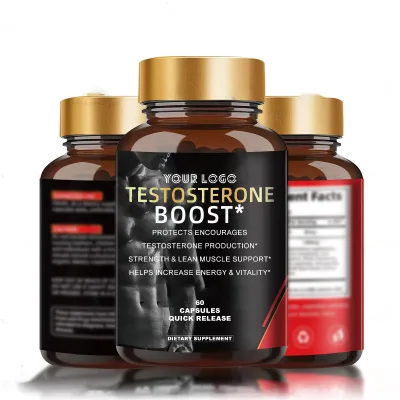
Buyers must first distinguish between products targeting general immune resilience and those formulated specifically for hormonal balance, as the supplied data indicates distinct product names and functional claims for each category. The market listings reveal items explicitly labeled as "Immune Booster Capsules" with a primary function of supporting the immune system, alongside separate entries for "Testosterone Booster Capsules" designed to provide natural energy and support muscle building. This distinction is critical because a single SKU rarely satisfies both specific physiological goals simultaneously, requiring procurement teams to verify the exact product specification before placing orders.
Procurement strategies should account for the observed variability in product specifications, such as the difference between 60 and 120 capsules per bottle, which directly impacts unit economics and inventory planning. While some listings emphasize organic features and herbal extracts, others highlight softgel formats or specific dosage forms like standard capsules, necessitating a clear definition of the desired delivery mechanism. Buyers should analyze the "Main Function" field carefully to ensure the selected supplier's inventory aligns with the specific health claims required for the target demographic, which is consistently listed as adults across the observed range.
Product Scope and Observed Listing Signals
The observed product scope encompasses a range of herbal supplements designed for adult consumption, with a clear emphasis on natural ingredients and specific health outcomes like energy management and immune support. Listings frequently mention "Herbs Extract" as a main ingredient, suggesting a reliance on botanical sources rather than synthetic compounds, which aligns with the "Organic" and "Natural" feature tags found in the data. Buyers should note that while some products are marketed with "Low-Fat" attributes, the core offering remains focused on capsule-based delivery systems that facilitate precise dosing for daily intake.
Market signals indicate a strong preference for customizable packaging and branding, with "OEM ODM Private Label Service" and "Logo Printing" availability being standard offerings across the supplier base. The data shows a wide range of packaging types, from standard boxes to bottles containing 60 or 120 capsules, allowing buyers to tailor the presentation to their specific retail or distribution channels. However, the presence of both "With Logo Printing" and "Without Logo Printing" options suggests that buyers must explicitly state their branding requirements during the inquiry phase to avoid receiving generic, unbranded stock that may not meet their market positioning needs.
Technical Specifications to Verify
Verification of the dosage form and capsule capacity is essential, as the data presents conflicting or varied specifications such as 60 capsules per bottle versus 120 capsules per bottle for similar product types. Buyers must confirm the exact "Product Specification" and "Bottle Capacity" for each order, as these dimensions directly influence the shelf-life management and the recommended daily intake of two capsules. The "Dosage" instruction of taking two capsules once a day is a consistent claim, but the total number of servings per unit will vary significantly based on the bottle size selected, requiring precise calculation for inventory turnover rates.
The physical attributes of the supplement, including the "Type" of capsule and the "Flavor" profile, require strict validation to ensure compatibility with the target consumer's preferences. While "Softgel Capsule" and standard "Capsule" types are both observed, the "Flavor" is generally described as "Natural," which implies a lack of artificial sweeteners or strong taste masking. Procurement teams should request physical samples to verify the "Storage Method" requirements, such as keeping the product in a "Dry and Cool" place, and to confirm that the "Moisture Proof" packaging claims hold true under actual shipping and storage conditions.
Compliance and Safety Documentation
Compliance verification must focus on the presence of recognized quality management certifications, as the supplied facts list multiple standards including GMP, HACCP, ISO, and QS across different product listings. Some entries also mention KOSHER certification, indicating that certain suppliers may offer products adhering to specific dietary laws, which is a valuable differentiator for niche markets. Buyers should not assume that all listed products possess every certification mentioned in the aggregate data; instead, they must request specific certificates for the exact SKU being ordered to ensure regulatory alignment with their destination market.
Safety documentation must also address the "Not Applicable People" warnings, which explicitly exclude newborns, reinforcing that these supplements are formulated strictly for adult physiology. The "Shelf-Life" is consistently noted as 24 months or 2 years, but buyers must verify the production date and expiration date on the specific batch to ensure sufficient remaining shelf life upon delivery. Additionally, the "Storage Note" regarding moisture proofing and the "Storage Method" of dry and cool conditions must be validated through the supplier's packaging integrity reports to prevent degradation during transit and warehousing.
Cost Drivers and Commercial Terms
Cost structures are heavily influenced by the Minimum Order Quantity (MOQ), which ranges widely from 2 units to 5000 bottles depending on the supplier and customization level. The data highlights a specific MOQ of 500 bottles for certain private label services, suggesting that smaller orders may incur higher per-unit costs or require different payment terms. Buyers should anticipate that the "Customization" of labels and packaging will add to the base cost, and the "Service" of OEM/ODM support often carries a premium compared to purchasing standard, off-the-shelf inventory.
Payment terms and logistical costs are critical components of the total landed cost, with "T/T" (Telegraphic Transfer) identified as a standard payment method in the observed listings. The "Place of Origin" varies between Henan Province and Guangdong, China, which can impact freight rates and lead times depending on the buyer's location and the specific port of loading. Buyers must clarify the "Lead Time" and "Sample" availability, as the data confirms that samples are supported but does not specify the duration for production or shipping, requiring explicit negotiation to avoid supply chain delays.
Supplier Qualification and Quality Control
Supplier qualification should prioritize manufacturers that demonstrate a robust "Service" capability, specifically their ability to handle "OEM ODM Private Label Service" with "Acceptable Customized Label" options. The presence of multiple certifications like GMP and HACCP suggests a baseline level of quality control, but buyers must verify that these certifications are current and applicable to the specific production line for the ordered product. The "Customization" feature being available indicates flexibility, but the supplier's track record in managing complex labeling and packaging requirements should be assessed through past performance data or client references.
Quality control protocols must extend beyond the factory floor to include rigorous testing of the "Main Ingredient," which is listed as "Herbs Extract" across the product range. Buyers should request third-party test results to verify the purity and potency of the herbal extracts, ensuring they meet the "Organic" and "Feature" claims made in the product descriptions. The "Product Specification" of 120 or 60 capsules per bottle must be consistently met, and the "Packaging" integrity, described as "Box" or "Bottle," should be tested for durability to prevent damage during international shipping and handling.
Long-Term Procurement Checks
Long-term procurement success depends on establishing a reliable supply chain that can consistently meet the "Shelf-Life" requirements of 24 months while maintaining product efficacy. Buyers should implement a system to monitor the "Storage Method" compliance of their suppliers, ensuring that the "Moisture Proof" and "Dry and Cool" conditions are maintained throughout the production and storage phases. Regular audits of the supplier's quality management systems are necessary to confirm that the "GMP," "HACCP," and "ISO" standards remain active and that any changes in production processes do not compromise product safety.
Strategic planning must also account for the evolving nature of consumer preferences regarding "Feature" attributes like "Organic" and "Low-Fat," which may shift over time. Buyers should maintain open communication channels with suppliers to anticipate changes in "Main Function" claims, such as the transition from general "Immune Support" to specific "Energy Management" benefits. By regularly reviewing the "Product Name" and "Product Specification" trends, procurement teams can ensure their inventory remains relevant and aligned with market demands, preventing obsolescence and maximizing the return on investment for their supplement lines.
FAQs
What certifications do these immune support capsules have?
These capsules hold QS, HACCP, GMP, and ISO certifications. Some listings also include KOSHER certification. These standards verify manufacturing quality and safety protocols. Buyers can rely on these credentials for compliance. The product meets rigorous industry requirements for dietary supplements.
Can I customize the label and packaging?
Yes, customization is available for both labels and packaging. The supplier offers OEM and ODM private label services. You can choose between box or bottle packaging. Logo printing is supported with or without specific designs. This flexibility allows brands to create unique product identities.
What is the minimum order quantity for these capsules?
The minimum order quantity ranges from 2 to 5000 bottles. Specific listings may require a minimum of 500 bottles. This range accommodates both small trial orders and large bulk purchases. Buyers should check individual supplier requirements to confirm exact MOQs for their needs.
How should these capsules be stored to maintain quality?
Store the capsules in a dry and cool place. The packaging is designed to be moisture-proof. This storage method helps preserve the herbal extracts and vitamins. Proper storage ensures the product remains effective throughout its 24-month shelf life. Avoid exposure to direct sunlight or humid environments.
What are the main functions of these testosterone booster capsules?
These capsules support the immune system and provide natural energy. They also aid in muscle building support. The formula uses herbal extracts and vitamins as main ingredients. This combination targets energy management and overall vitality. The product is designed for adult users seeking health benefits.
Where are these immune booster capsules manufactured?
These capsules are manufactured in China. Specific origins include Henan Province, Kaifeng City, and Guangdong. These locations are known for dietary supplement production. Buyers can verify the exact place of origin with suppliers. The manufacturing sites adhere to the listed quality certifications.